
The Society for One-Place Studies is a leading organisation dedicated to supporting One-Placers worldwide.




... he had not only bumbled into a minefield but had set it off.
Telegraph & Argus, Bradford, 25.2.1984
Bishop Blunt's remarks were the spark that caused the explosion.
The Duke of Windsor, A King's Story. 1951
From the perspective of 2026, and not a great follower of Royalty, I found it difficult to understand why the Abdication of King Edward Edward VIII in 1936 was such a big crisis. (I am instantly musing on why I felt I should write 'Royalty' with a capital letter.)
This month's 'Scandal' prompt for the blog made me look into the Abdication further, and its surprising link with Bradford. It also made me realise that the crisis shaped the media we have today, and how we view our Royalty. Books continue to be written about the crisis and the role of the media in it. Understanding of the transactions between Royalty and the media (and us) continues to develop.
I use the word 'transaction' because Royalty need the media as much as the media need them. Royalty need the media to affirm their continuing presence, and their legitimacy. Royal scandals now seem almost hoped-for by newspapers, who believe it is a sure-fire way to sell more copies. If there isn't a current scandal, the newpapers will constantly hint that there is one in the offing, or even manufacture one (see the constant scrutiny of Meghan Markle).
No doubt the Abdication (another capital required there) was not the first royal crisis sparked by scandal, but this one resonates still today. Apart from Royalty itself, the Church (yet another capital there) was involved – another flashpoint for scandal. The Powers That Be decided that the Abdication (or, really, what led up to it) involved serious scandal. They tried to keep it quiet, but it was the Bishop of Bradford, Alfred Blunt, who let the scandal cat out of the bag, a Bradford Telegraph & Argus reporter who picked the cat up, and the Yorkshire Post editor who ran with it. EdwardVIII abdicated just ten days after Bishop Blunt's speech in Bradford.
While still Prince of Wales, Edward had fallen in love with a woman, Mrs. Wallis Simpson, who had already been twice married (and was still married), and had the extra black mark of being American. Nevertheless, when he became King, he decided he needed her support in the role. He became adamant that he would marry her, and as do so soon as possible (her second divorce was currently being arranged, with a staged hotel adultery on the part of the complaisant Mr. Simpson).
Harold Nicolson, the famous diarist, commented The upper class mind her being American more than they mind her being divorced. The lower class do not mind her being American but loathe the idea that she has had two husbands already. As supreme head of the Church of England, Edward was in spectacular conflict with the marriage teachings of the Church.
As Prince of Wales, Edward's libertine conduct abroad had already fed scandal to European and American newspapers, but the British press, and the BBC, had reached a gentleman's agreement, under pressure from the government, not to expose the prince. Britons abroad felt no such inhibition, and went so far as to write letters of complaint to the Prime Minister, Baldwin. None of this was made known to the British public.
They didn't know, for instance, that in Kenya, partying with the wife-swapping Happy Valley set of British expats (immortalised in the film White Mischief), Edward had at first refused to respond to a telegram calling him home to his critically ill father King George V. He tarried by claiming the telegram was a political trick. More likely, as was no secret, Edward was intent on pursuing the wife of the British Governor of Kenya – one of many targets of his attentions, even at the same time. His assistant private secretary, Alan Lascelles, decided at this moment to resign, having long endured disgust at Edward's behaviour while Prince of Wales. According to Sarah Bradford's 2013 book 'George VI: The Dutiful King', Lascelles said Sir, the King of England is dying; and if that means nothing to you, it means a great deal to us. (George V did not actually die then.)
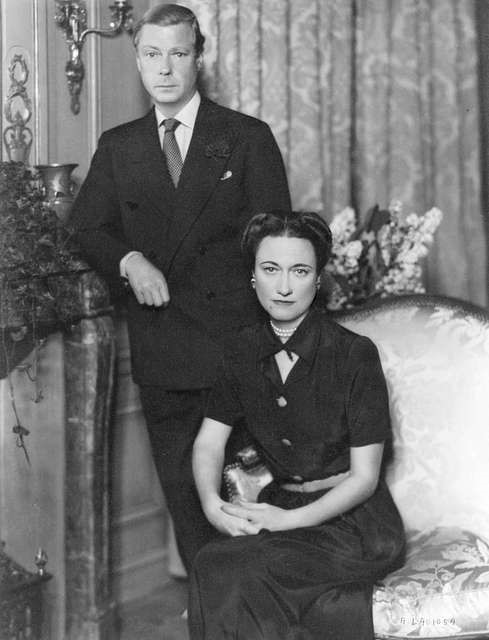
Prime Minister Baldwin eventually had the delicate task of raising his poor conduct with Edward when he did succeed his father as King. Baldwin reportedly said to him “I don’t believe you can go on like this and get away with it”.
Edward soon afterwards put forward the idea of a morganatic marriage, suggested to him by Lord Rothermere, editor of the Daily Mail. This would mean Wallis would not become Queen, and any children could not succeed to the Throne. Baldwin consulted with the Cabinet (most of whom were also in the dark), and also the prime ministers of the Dominions, as he was required to do by a 1931 law on matters affecting succession to the Throne. All but two were strongly against a morganatic marriage with Wallis Simpson. (The US consul in Canberra reported to Washington: The Australian outlook on life is distinctly middle class and on morals distinctly Victorian. )
One exception was Cabinet member Duff Cooper, a friend of the king. The other was Eamon de Valera, Prime Minister of the then legally still a Dominion, but confusingly named Irish Free State. He was then actively focussed on separating Ireland from England, so sought to benefit from the apparent indecision, hence weakness, of the British government. He replied to Baldwin that he would favour a morganatic marriage.
This broke the consensus among the other Dominions. It inserted a delay which helped de Valera in his project. Once the other Dominions had legislated their assent to Abdication, Ireland temporarily became a separate monarchy. Ireland then promptly legislated to abolish the British king as its head of state. As The Irish Story website puts it: At one sweep, and largely as a result of events outside of Ireland – the removal of the British monarchy from internal southern Irish politics, the goal of Irish republicans for many decades, had been achieved.
Had Edward acted against Government advice and married Wallis, which he legally could have done and remained King, he was advised that the Government, and those of the Dominions, would all resign. That would leave no functioning government across the UK and the Commonwealth. Edward could not rule without Parliament, as that would violate the 1689 Bill of Rights.
This did not mean that Edward lacked supporters – just not enough of them. Edward had actually been very popular with sections of the public (mostly working class people, who saw him as empathetic, modernising, and stylish and glamorous). Winston Churchill (then out of power, and not popular) had proposed a referendum, but met a noisy crowd of MP's in Parliament telling him to “Shut up!”. The Labour and Liberal leaders brought their parties along to support the Government, Attlee telling Baldwin that “Despite the sympathy felt for the king… the party – with the exception of the intelligentsia, who can be trusted to take the wrong view on any subject – were in agreement.”
Meanwhile the Bishop of Bradford inadvertently revealed there was a problem. (He later insisted he had known nothing about Wallis Simpson at the time of writing his speech in October). In his speech to a diocesan conference on 1st December 1936, he wanted to emphasise the solemn meaning of the Coronation ceremony (which had not yet taken place, and never would). He said, famously as things would turn out:
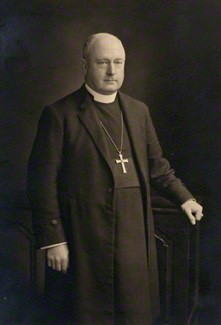
… on the faith, prayer and self-dedication of the King himself ... it would be improper for me to say anything except to commend him and ask you to commend him to God's grace, which he will so abundantly need, as we all need it - for the King is a man like ourselves - if he is to do his duty faithfully. We hope that he is aware of his need. Some of us wish that he gave more positive signs of such awareness.
Here, the Bishop actually meant to refer to Edward's noted poor attendance at church. But the Bradford Telegraph & Argus (T&A) reporter in the audience, Ronald Harker, took note, realised the possible significance, and excerpts from the speech appeared in the Bradford newspaper next day, along with this comment:
Although the Bishop of Bradford, since his appointment in 1931, has generally made his diocesan conference address the vehicle for weighty pronouncements, there was no clue at the beginning of the proceedings at Church House yesterday that he was about to deliver a speech of national and not merely diocesan importance.
The T&A reporter had also sent the story to the Press Association. The Yorkshire Post, a regional newspaper more widely read than the T&A, picked up the story from the Press association, made it their Editorial, and later claimed they had 'the scoop of the century'. This in turn gave the cue to other British newspapers to headline the story next day, and break what they had called, in their gentlemen's agreement 'The Great Silence'.
Downing Street then tried to steer the situation. According to confidential files (as reported again in the Yorkshire Post) ministers prepared to brief the press … in order that the morning newspapers might be in a position to guide public opinion. (Free press, anyone?) The editor of the Morning Post had written to the Prime Minister a month before the storm about the quandary the British newspapers were in:
Some have urged me, as editor of a newspaper which is the staunchest supporter of monarchical institutions, to break what they term 'The Great Silence'. The fact of the subject being ventilated would inevitably open the flood gates which now hold back the sensational newspapers. The result would be a deadly blow to the monarchy.
What I have learned from this story is that the 'Abdication crisis' was as much about the scandalous conduct of a king, and the subservient behaviour of the British press about it, as it was about the Constitution. That choice of focus in the phrase 'constitutional crisis' is another 'great silence'. Once it had been decided that Edward must abdicate, the succession process was smooth, and in fact prepared centuries in advance. It was clear who was next in line to the Throne, and this person, however personally reluctant, was willing to respect his ordained duty and step up to become the next King (George VI).
There are scandals around the newspapers' behaviour. The Yorkshire Post falsely claimed 'the scoop of the century'. Their story came later than the Bradford T&A's, whose Editor-in-Chief sent a sharp letter to the Editor of The Times to inform him that it was the T&A reporter's despatch to the Press Association that had broken the story nationally, not the Yorkshire Post.
The editor of the Yorkshire Post later sought to excuse himself from breaking The Great Silence. He claimed he had supposed that, since the Bishop had apparently intimated a scandal about the King, then the Bishop, as part of the Establishment himself, must have known about it, and somehow had higher authority to reveal it. So the Yorkshire Post editor stated a falsehood and, at least from the standpoint of today, was obsequious to 'authority' both in accepting the Great Silence and seeking to excuse himself from finally breaking it (as he supposed, falsely, he had done).
The Bishop himself was perhaps disingenuous in his account of his actions. It was no doubt true, as he said, that he wrote his speech in October before he knew about the King's affair with Wallis Simpson. But his private papers show that he did know about it by the time he came to give the speech in December
For one moment I appeared in the pages of history and became front page news in The Times; my part in the events leading up to King Edward VIII's Abdication has been absurdly exaggerated, and so completely misrepresented by the gossip columns of the Press and the current scandal-mongering of gutters and clubs alike, that I think it may be of interest if I set down what actually I had to do with the events. We (the Church) were all trying to key England up to approach the Coronation with some sense of religious education. I was planning to say something about it at my Diocesan Conference in December.... I wrote my address in October and had it typed by my Secretary, and put it aside for use in December when the Conference was to meet. At that time I had never heard of Mrs Simpson and knew nothing whatever of the King's 'affair' with her.
He goes on to say that the Provost of Bradford Cathedral, Edward Mowll, had mentioned a businessman's remark that You parsons are trying to make us take a religious view of the Coronation. What's the use when the principal actor in it has no use for that sort of thing himself?
and also that he had been told about Mrs Simpson by the Bishop of St. Albans in November.
For a moment I wondered whether I ought to alter the words I had written. I decided not to for the simple reason that as the words had no reference to the King's love-affair they could not be twisted to contain such a reference. Sancta Simplicitas! [Holy Innocence]. Next day the storm broke and the heather was afire. I had no idea that so much dry heather was lying about waiting to be kindled; nor did I know that for some time the newspapers had been straining at the neck for the moment to break the news.
In fact we know that, contrary to his usual practice, the Bishop did stick rigidly to his October-written script in this December speech, probably in an effort not to let out his knowledge. It is quite possible that, even so, he may have subconsciously intoned his delivery in a way that alerted the T&A reporter.
Churchill was one of Edward's few strong defenders at the top of society. Rumours circulated that he was starting a new Party to contest the election that (constitutionally) would have to follow if Edward dismissed Baldwin, or dissolved Parliament. Legally, Edward could have done either of those things. But the political reality was that there was not enough support to allow those moves to lead to a stable new Government. Politicians threatened to resign en masse at any move of Edward's that would install Wallis as the King's wife, simply because they did not approve of her having that status. (Although there is the view that the Abdication issue was welcomed, because it gave the pretext for removing an under-performing and unserious monarch. Edward was documented to be lazy and dismissive of administration work and lax with security - often losing papers, leaving them scattered around at house parties, and returning them with cocktail or red wine stains.)
Still, the focus on Constitution prevailed, while Churchill demurred and said in Parliament, after Edward had accepted the reality of the situation and abdicated, There was at no time any constitutional issue between the King and his Ministers or between the King and Parliament. The supremacy of Parliament over the Crown: the duty of the Sovereign to act in accordance with the advice of his Ministers: neither of those was ever at any moment in question.
Perhaps it was the Bishop of Bradford's renewed foregrounding of the duty of the monarch that led to the harping on this word by the British press when reporting on the next monarchs. (An image of duty and self-sacrifice had already been promoted for the royal family during WW1, when they had to protect themselves from the implications of their family links with Germany. Five noble German relatives were stripped of their British titles, among them the Dukes of Albany, and of Cumberland & Teviotdale, because they had sided with Germany).
Alan Lascelles had the job of managing the royal family's public image when he returned to royal service in 1935, only to meet the problem of Edward once more. In his 2019 book 'The Family Firm', Edward Owens wrote about Lascelles: The courtier’s role in ‘re-inventing’ the monarchy after the 1936 abdication crisis was notable for the way he sought to elevate George VI and the new royal family as everything that Edward was not – i.e. domestic, dutiful and self-sacrificing. It is no accident then, that books about the monarchy, as I've since discovered, so often have the word 'duty' in their titles.
But the Bishop was also saying in his speech that this duty needed, beforehand, God's Grace. I confess I had to look up exactly what 'commending someone to God's Grace' means. It means placing someone in the unconditional, unearned, and freely-given care of God, and was traditionally said particularly when a person was vulnerable and without other protection (as when leaving on a dangerous mission). In other words - whatever you do or have to do, God will forgive you and continue to care for you.
'Grace' is an important word in Christianity, sharing a root with 'gratuity' (unearned), but today it just suggests a vague benevolence, with the unconditionality component forgotten. (So addressing a personage as 'Your Grace' is, literally, placing yourself at their mercy.) The dictionary I looked at gave this as the first meaning of the word: a quality of moving in a smooth, relaxed and attractive way, which no doubt adds to the confusion.
The fact that phrases like 'God's Grace' feel obscure in meaning today is more in line with Edward's attitude at the time. About the state-mandated Protestant Declaration he was forced to make to Parliament on his accession, he said in his (ghost-written) 1951 memoir 'A Kings' Story:' The duty of uttering this outmoded sentiment was repugnant to me. In spirit it seemed wholly inappropriate to an institution supposed to shelter all creeds.
But Edward was not wholly without religious feeling or spirituality. He wrote in his memoir:
To the extent that I did not follow my father’s unfailing custom of attending divine service every Sunday morning, Bishop Blunt’s criticism was no doubt true. But if he really wanted to impute to the monarch a want of faith, then he overlooked the spiritual enrichment and the private enjoyment that I derived from the choral evensong services at St George’s Chapel. There I would quietly occupy my stall as Sovereign of the Order of the Garter whenever the spirit moved me – and it often did.
Edward also devised the new ceremony of 'Vigil of the Princes' for his father's lying-in-state.
All the time my father lay at Westminster, officers stood vigil at each corner of the coffin. I had been to see it and was profoundly stirred. It gave me an inspiration. Here was a way in which my brothers and I could pay our respect to our father in a simple manner. We would do a tour of duty ourselves.
This was one of his modernisations that was widely appreciated, and retained at the lying-in-states of the Queen Mother in 2002 and Queen Elizabeth in 2022.
Edward and Wallis also wished to have a religious wedding after their civil wedding in France. It was conducted for them by a dissenting minister of the Church of England, Reverend R. Anderson Jardine, vicar of St Paul’s Church, Darlington. He had been warned by his Bishop that he had no episcopal licence or consent to conduct the ceremony. According to Wikipedia, the vicar was widely shunned afterwards, unsuccessfully attempted a new religious mission 'Windsor Cathedral, A Shrine to Love' in USA, and there marketed two books and lectures on the strength of his notoriety. But he died penniless and was even consigned to an unmarked grave. Neither the Church nor the Windsors showed him any Grace, or even financial help.
Sources
Bradford Historical & Antiquarian Sociey (Mary Lister)
at https://www.bradfordhistorical.org.uk/bishop.html
The History Press website
at https://thehistorypress.co.uk/article/king-edward-viii-and-mrs-simpson/ ( John van der Kiste)
Biography.com website at https://www.biography.com/royalty/edward-viii
The Irish Story website (Cathal Brennan) at https://www.theirishstory.com/2011/03/04/the-abdication-of-edward-viii-and-irish-independence/
Donal K. Coffey British, Commonwealth, and Irish Responses to the Abdication of King Edward VIII. Irish Jurist , 2009, New Series, Vol. 44 (2009), pp. 95-122
at https://mural.maynoothuniversity.ie/id/eprint/19671/1/DC_british.pdf
Once a King: the Lost Memoir of EdwardVIII (edited by Jane Marguerite Tippett 2023)
Foster Hill Road Cemetery website (Christopher Wilson)
at fosterhillroadcemetery.co.uk/robert-anderson-jardine-the-plucky-little-parson
The Society for One-Place Studies is a leading organisation dedicated to supporting One-Placers worldwide.