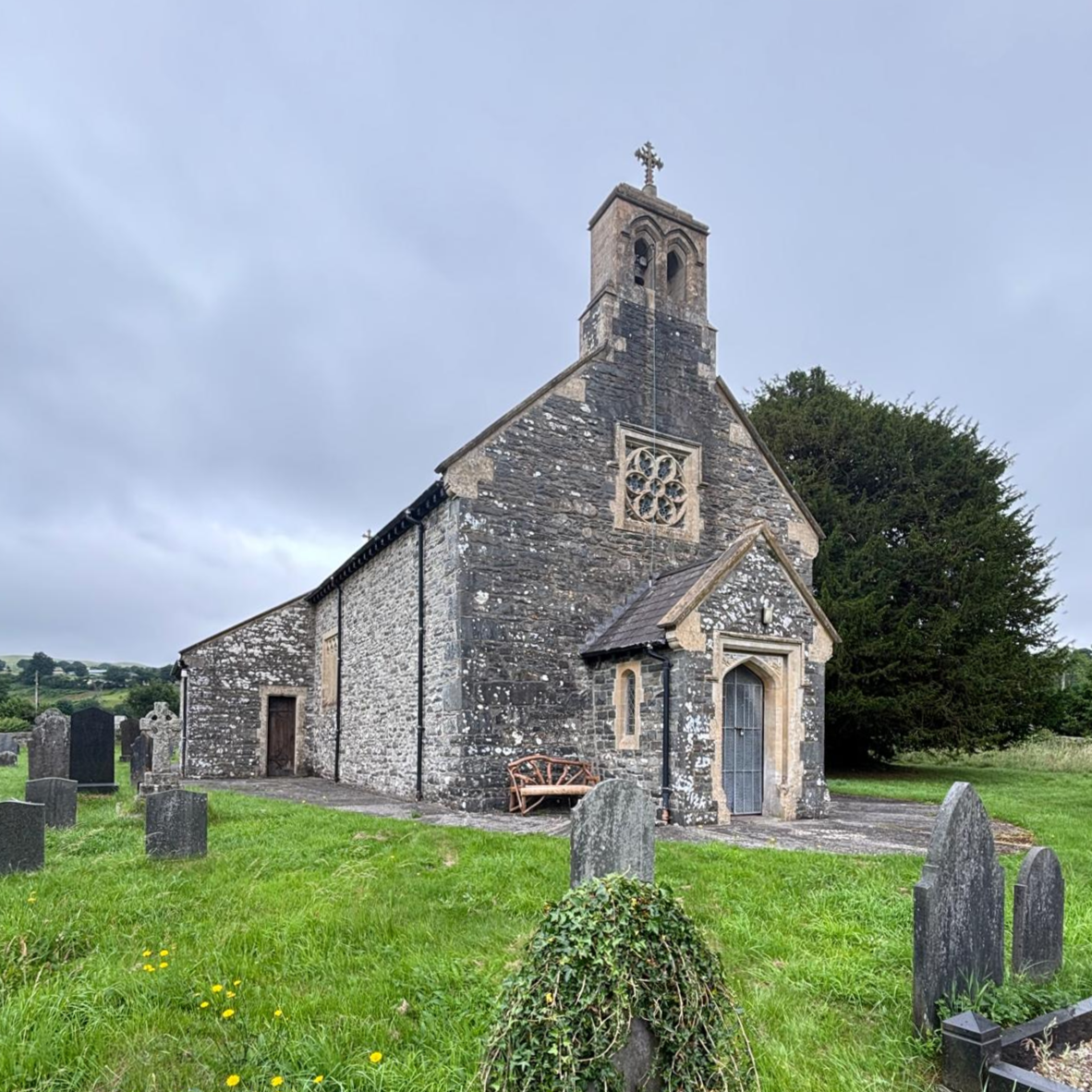
Llanfair Clydogau is a small rural parish in West Wales’ Teifi Valley, approximately three miles North East of the town of Lampeter. Its documented history stretches back centuries, at least as far back as the dissolution of the monasteries in the early 16th Century. But Llanfair has been inhabited for millennia, as evidenced by the remains of the Roman roads, the Iron Age hill forts, and the prehistoric cairns which dot the area.
When you think of the great overarching narrative of Welsh history, places like Llanfair Clydogau don’t feature too prominently. The parish did have moments of relative notoriety, but for the majority of its history, it was otherwise insignificant. But that makes Llanfair the perfect kind of place to study. For the vast majority of Welsh history, most Welsh people lived in dispersed, rural, farming communities just like Llanfair Clydogau. The stories we find here will mirror the stories of many other places.
Personally, my interest in Llanfair Clydogau stems from the 18th and early-19th Century branches of my family tree. Among the ancestors of my 4x great grandparents, William Williams and Anne Davies of Clwtycoedwr, in the neighbouring parish of Llanddewi Brefi, are many people who were born, lived, and died in the parish.
William’s father was born in Llanfair, but his early life there remains a mystery. Anne’s family were among the upper ranks of Llanfair’s tenant farmers. Her direct ancestors farmed at Blaenywern, Llanfairfawr, Parcneuadd, and Pentre, but at one point in history, her extended family actually comprised most of the large tenant farmers in the parish! The stories of these families have me enthralled, so, for me, Llanfair Clydogau holds the most anticipated answers to my genealogical mysteries and it’s also the key to developing an even deeper understanding of my ancestors’ daily lives. To find the stories of our ancestors, we must first know their place.