
The Society for One-Place Studies is a leading organisation dedicated to supporting One-Placers worldwide.




No, not National Family Tree Week, National Tree Week – a week which, in Britain, marks the start of the winter tree-planting season (and which this year runs from 28 November to 6 December. Why write about this event in the Society’s blog? There are many reasons, and they go well beyond the similarities between family tree diagrams and the patterns of real-life roots and branches.
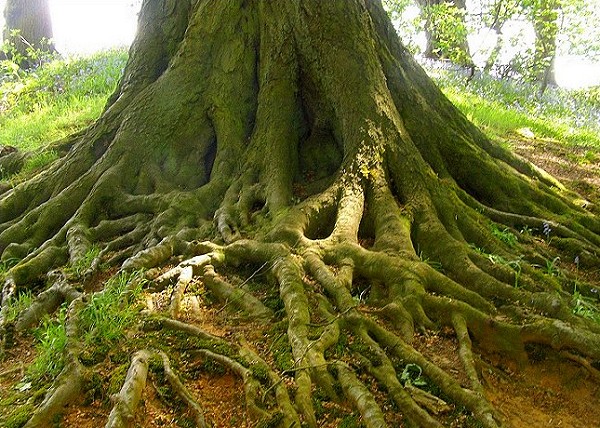
Today, surrounded as we are by brick, concrete, metals and plastic, it is difficult for us to fully appreciate just how much trees meant to our ancestors and the communities who occupied the Places we study. Yet our forebears would have found it difficult to live without trees, and I would argue that even in this modern, technological age, we too need trees, almost as much as those who went before us.
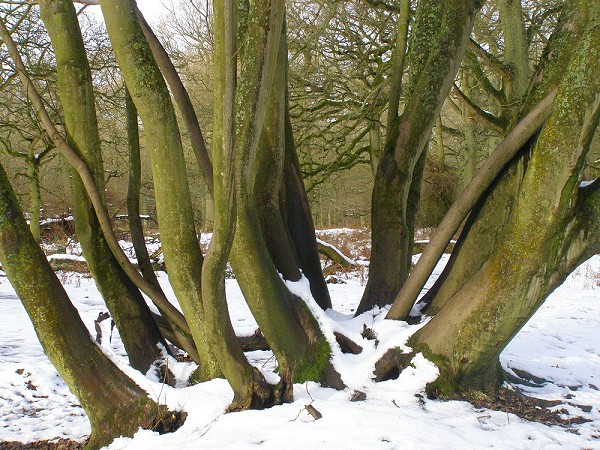
For many hundreds of years trees have provided raw materials not only for the construction of people’s homes, but also for making the furniture within them, many household utensils, the clogs on people’s feet, the leather (tanned with tree bark) from which shoes, clothing and other items were crafted, and dyes used to add colour to cloth.
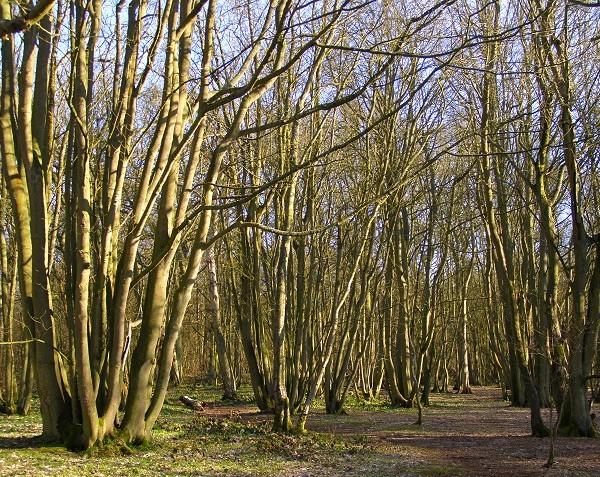
Trees were a source of fuel for the fires needed for warmth and for cooking, and a source of wood for hurdles and fences; tubs and barrels; spears, bows, and arrow shafts; handles for knives and axes; wagons, carts and their wheels; bridges; yokes; moulds for glass-making; brooms; spinning wheels; printing blocks; and many more essentials from cradles to coffins. Smoke from burning wood was used to cure fish, while charcoal was used to smelt metals.
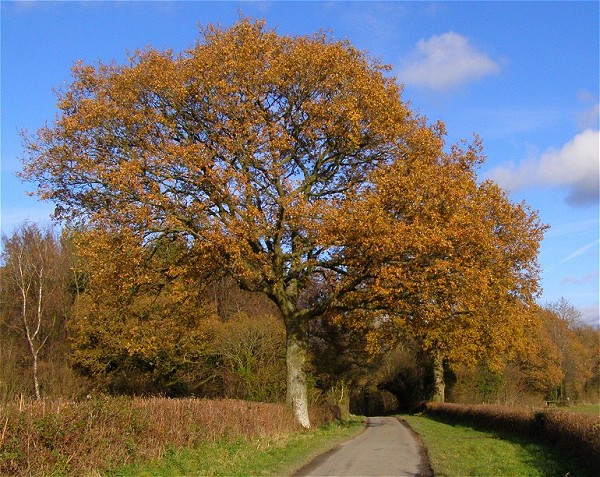
When people took to the water, trees provided the raw materials for rafts, canoes, boats, the oars with which to power and steer them, and eventually ships: vessels which brought new food supplies, and in time new lands and their raw materials, within reach. It took over 2,000 oak trees just to make HMS Victory – imagine how many millions of trees were used to build the many fleets of ships which engaged in trade, travel, war and defence over the centuries. No wonder Britons sang about hearts of oak.
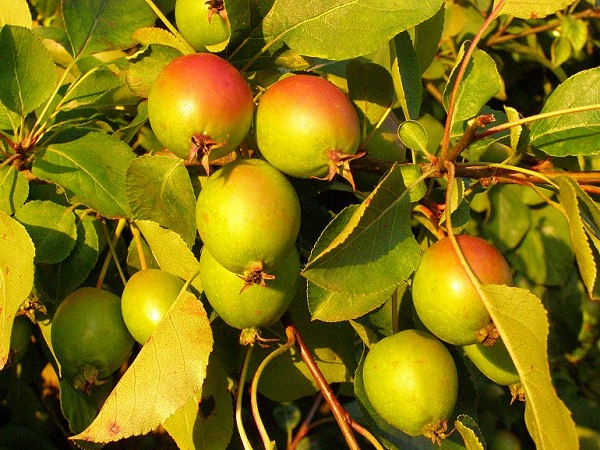
Trees also yielded fruits, berries and nuts – apples, pears, elder flowers and berries, sloes, plums, juniper berries, haws, cherries, acorns, chestnuts, and hazelnuts – which were (and in most cases still are) used for food, or for making drinks, or both.

Trees not only provided food and drink, they fed livestock too. People with the right of pannage, for example, were able to release their pigs into their local woods to fatten up on acorns and beech mast (shown above) in the Autumn. This custom continues today in the New Forest in Hampshire.
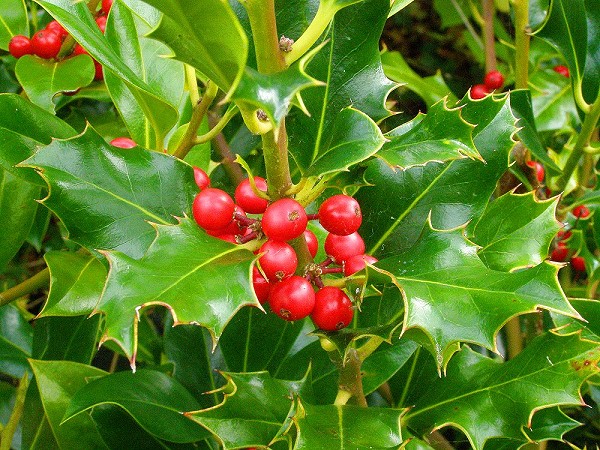
It is perhaps not surprising that trees were the stuff of folklore and legend as well as being sources of vital raw materials. Yew trees have an association with churchyards and other sacred places which goes back to time immemorial, with many being older than the churches now standing in their midst. Another evergreen, holly, has also long been surrounded by superstition and myth, and to this day is still brought into our homes at Christmastime (for decoration now of course, but in times past the seemingly magical ability of holly to retain its green leaves through the winter was thought to assure the return of spring). Rowan trees meanwhile were thought by many to give protection from witches.

Over the centuries, people have brought many new trees to Britain, some for practical uses and others for ornamental purposes. In the latter category, horse chestnut trees were introduced in 1616. Another species, imported from much further afield, is the monkey puzzle tree, also known as the Chilean pine. Although the tree is an evergreen and does indeed come from Chile, it is not a pine.
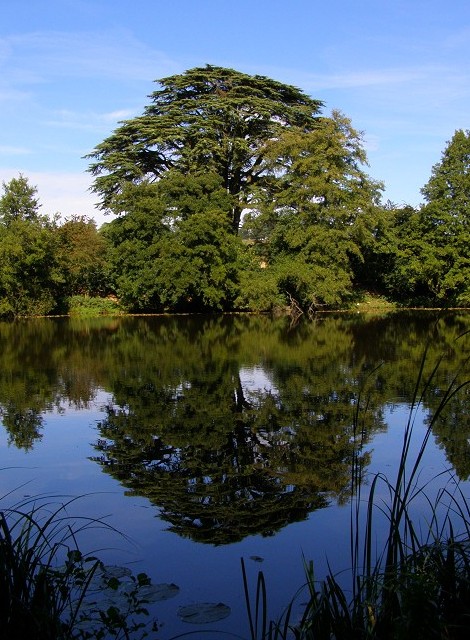
The Cedar of Lebanon, once common in its native Middle East, is a popular specimen tree in UK parks. The one pictured above can be seen at Fawsley Park in Northamptonshire, which was landscaped by Lancelot ‘Capability’ Brown.

Falling into the ‘utility’ category of tree imports are various species of conifers, fast-growing and ideal for timber production. The planting of large swathes of our uplands with these trees in the 20th century was decried by many, with the forests so formed often regarded as dark and largely lifeless ‘blots on the landscape.’ These days more thought tends to go into the creation and management coniferous plantations, making them visually less intrusive and more wildlife-friendly.
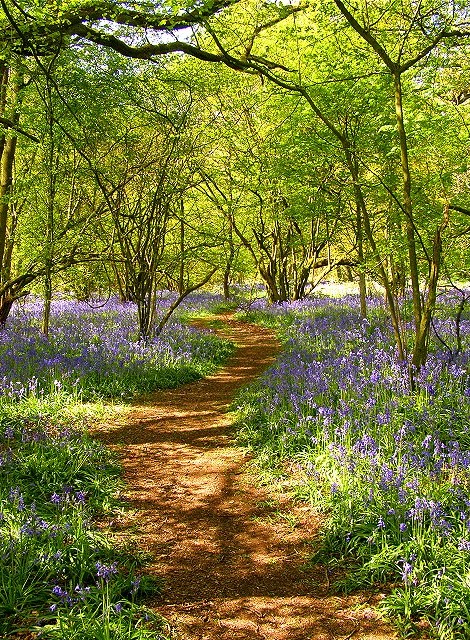
Today, woodlands still have a role as sources of timber and other raw materials (forestry statistics and forestry facts and figures for the UK can be viewed on the Forest Research website). Increasingly however, with more and more land being swallowed up by urban growth and intensive agriculture, woodlands are also seen as havens for wildlife, and as semi-wild places where people can escape from the concrete jungle and connect with nature.
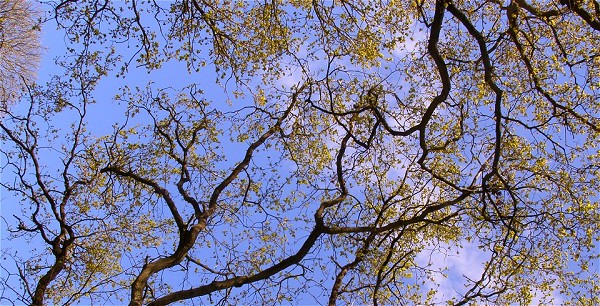
Why not use National Tree Week as an opportunity to take a closer look at the trees and woodlands of your one-place study, and their importance to your Place’s people?
Steve Jackson
Social Media Coordinator
All photos by the author.

Society for One-Place Studies Social Media Coordinator. One-place studies of Waters Upton, Shropshire; Marton Hall, Shropshire; Fawsley, Northamptonshire.

Beautiful photographs. Recently been doing more walking and some of the trees are just stunning and so important to the air we breathe and our well-being. The one place study I am working on for Ingleby, Derbyshire mentions a 600-year-old Elm tree, sadly in a poor state of health back in the 1800’s, not surprised at that age. Of course not sure how they know its that old.

Thank you Gay! Another use for trees in history that I could have mentioned was as hiding places. The most famous example is perhaps the Royal Oak in Boscobel Wood, Shropshire, in which the future King Charles II of England hid to escape the Roundheads following the Battle of Worcester in 1651.

(Late response, sorry) Trees in Sticklepath: Commemorative trees were planted eg by the WI at the time of the Queen’s coronation by the president and youngest member. Sadly neither survive now. Loss of trees (a row of magnificent elm trees) during the road widening was a lasting memory for my grandmother. The housing estate is named in honour of the magnificent (still standing) oak – Oak tree Park. Many forges had shade for the waiting horses, ‘Under the Spreading Chestnut…’
https://www.flickr.com/photos/135489732@N02/22848758392/in/album-72157659988461929/
Link to photo of the Monkey puzzle that greeted your arrival in Sticklepath in the past.
https://www.flickr.com/photos/135489732@N02/22862258395/in/album-72157659988461929/
Link to photo of the Oak tree before the field was sold for housing
The same tree with houses and the ‘Millennium seat’ feature in a post:
https://helenfinchsticklepath.wordpress.com/2020/11/28/how-family-trees-grow-to-forests-following-francis-hellier-through-the-census-and-beyond/
Sorry can’t see how to post the photos themselves.
The Society for One-Place Studies is a leading organisation dedicated to supporting One-Placers worldwide.
Steven Jackson