
The Society for One-Place Studies is a leading organisation dedicated to supporting One-Placers worldwide.




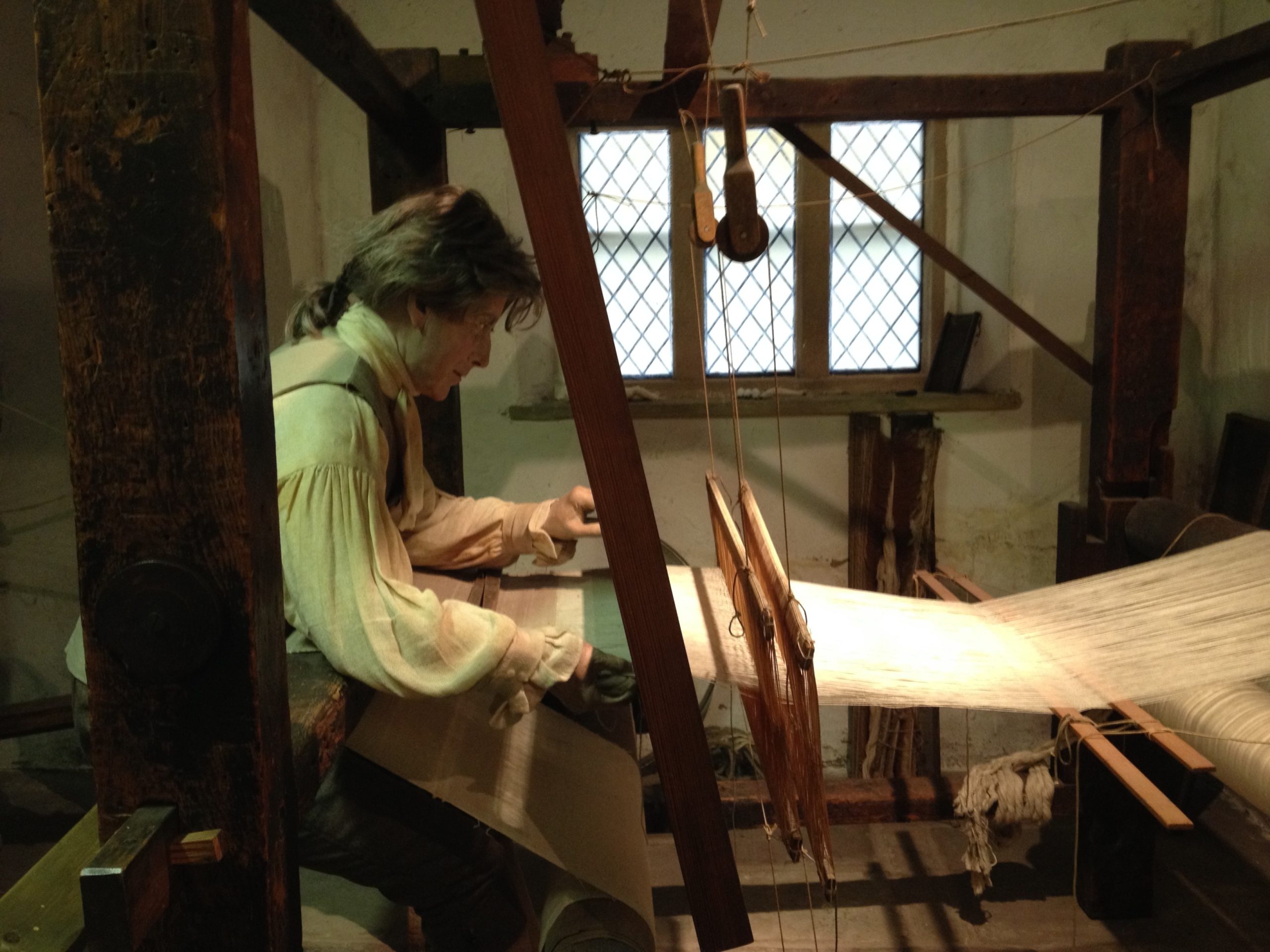
The youngest children recorded as working were four boys of 8 and a girl of 9, all woollen piecers. This involved running between the looms joining together broken pieces of wool which had snapped as the looms stretched out. The oldest was a man aged 86, a minister. Excluding him, the eldest was a man aged 75 and three aged 70, all woollen weavers, and an Ag lab aged 70. The oldest woman working was a 65 year old schoolmistress and another 65 year old female servant.
In a rash moment on social media I said that there were no 'ag labs' in my place. For Springhill itself it is still true, but I was surprised to find 10 in the wider area as the pattern is very much that of small scale pastoral farming of very unpromising clay/boggy land. In this snapshot nearly a third of workers were woollen weavers and wool manufacturing accounted for over half of all the jobs held. For the current crop of weavers it is difficult to tell if these were industrialised or the remnants of the hand loom industry. I suspect the focus will change over time and fully expect woollen to be replaced by cotton weavers as the century progresses. Indeed one enumerator in a later census didn’t even bother to write it out fully, resorting to ‘PLWC’ or power loom weaver of cotton instead. There are a lot of PWLCs around here.
The most unusual occupation in 1841? Chair bottomer. Not a joiner, there were three of those as well. Surprised that ‘chair bottomer’ was a full time job.
What about your places? Anyone got any younger or older people in employment? Any unusual occupations?
Janet Barrie
The Society for One-Place Studies is a leading organisation dedicated to supporting One-Placers worldwide.